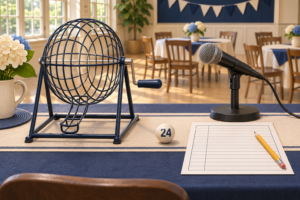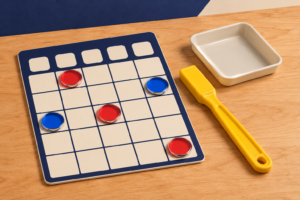
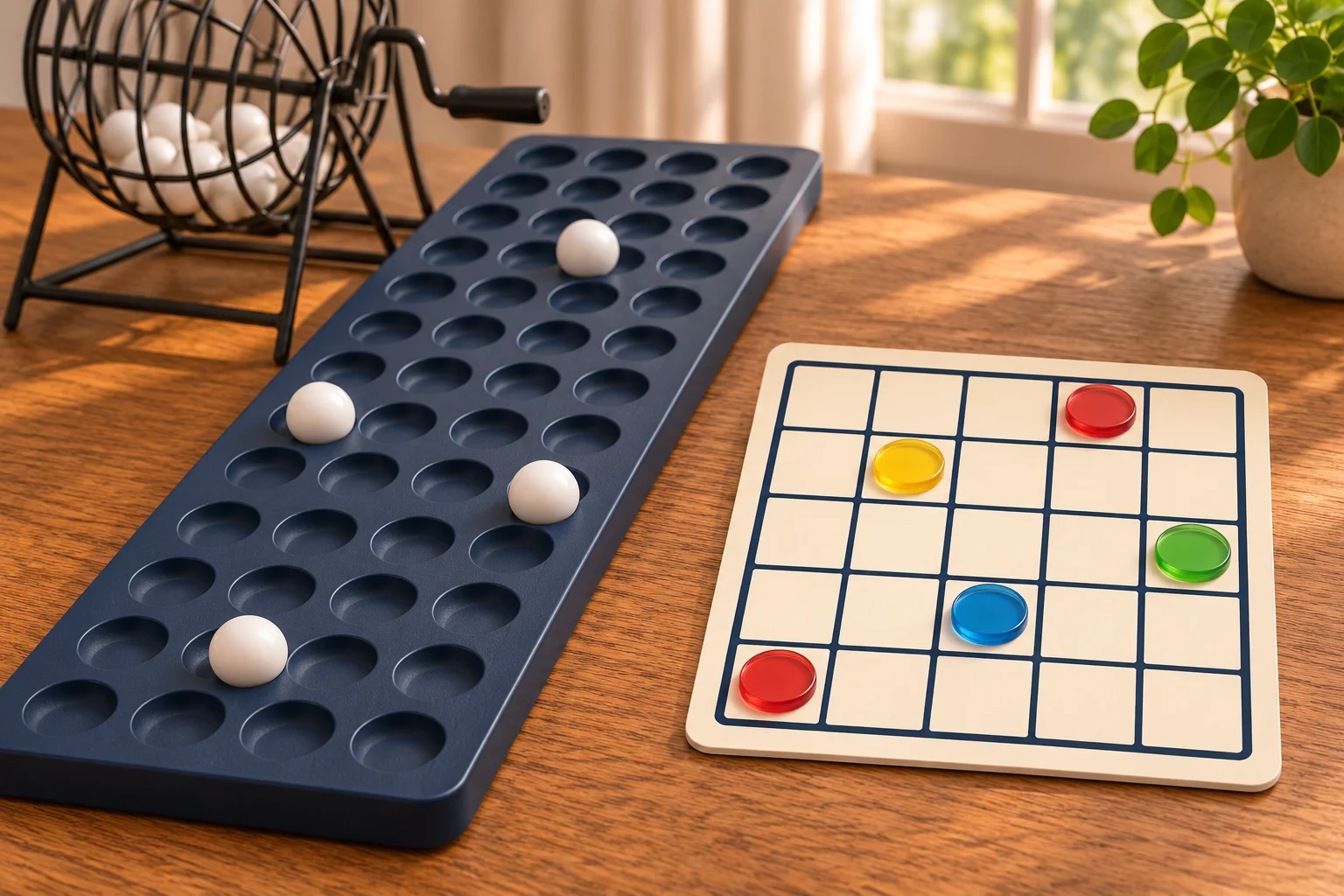
A bingo master board records or retains the numbers called by the organizer. A player card holds one player’s number arrangement and shows progress toward the announced winning pattern. They work together, but they are different components and should be checked separately when buying a bingo game set.
For a family group, that distinction can prevent a simple mix-up: clearing the caller’s record while someone is still checking a claim, or treating marks on a player’s card as proof that the numbers were called. For a buyer, it helps turn “board included” into a clear component requirement.
This guide explains the equipment roles and the questions to ask about a master board. It does not replace the session’s rules or assume that every checking board has the same construction.
What the master board does
The caller needs an organized record of the numbers already announced during the active draw. Depending on the equipment, that record may involve retaining drawn balls in a matching tray or using another specified marking arrangement.
A master board is part of that checking process. Confirm how the actual design is used, what information it shows, and how it keeps the active record clear. A flat printed board and a recessed ball tray may require different handling.
Do not infer automatic announcement, electronic storage, or a public display from the phrase master board. Those would be separate features requiring confirmation. A manually managed record still depends on the organizer following the intended routine.
What the player card does
A player card presents the arrangement the participant marks during play. The player listens to the calls, marks matching numbers, and checks progress against the pattern announced for that round.
The card does not contain every possible call in the same way as the caller’s reference. Nor does a completed-looking pattern establish a valid result on its own: the marks must be checked against the recorded calls and the session’s rules.
Our how to play bingo guide explains the player sequence. When sourcing equipment, keep that sequence separate from the physical board the caller uses to retain the call record.
Compare the two components by role
| Question | Master board or checking tray | Player card |
|---|---|---|
| Who uses it? | The organizer or person checking calls | The individual participant |
| What does it track? | The active draw’s recorded calls | The participant’s marked arrangement |
| What should match? | The selected format and its recording method | The selected format and announced rules |
| What needs testing? | Clarity, retention or marking method, and caller workflow | Readability, marker fit, and player handling |
| When is it cleared? | When the organizer’s procedure says the draw is finished | When the session’s reset instruction applies |
Names in product listings can vary. If a description says “bingo board,” ask whether it means a caller reference, a player card, or another component. A photograph helps identify the item, but a written explanation is better for confirming what the quotation includes.
Match the board to the format and equipment
Confirm the bingo format before selecting the checking arrangement. The numbered range and player materials need to belong to the same intended game. Do not assume a board from one kit is appropriate merely because it fits on the same table.
The 75-ball versus 90-ball comparison explains why format is an early decision. For a replacement board, identify the caller and ball set already owned, then request a confirmed match.
If the design retains physical balls, ask about the intended ball dimensions and the tray’s arrangement. Do not treat visual similarity as compatibility. A ball can display the right number while still being an unconfirmed fit for a particular checking tray.
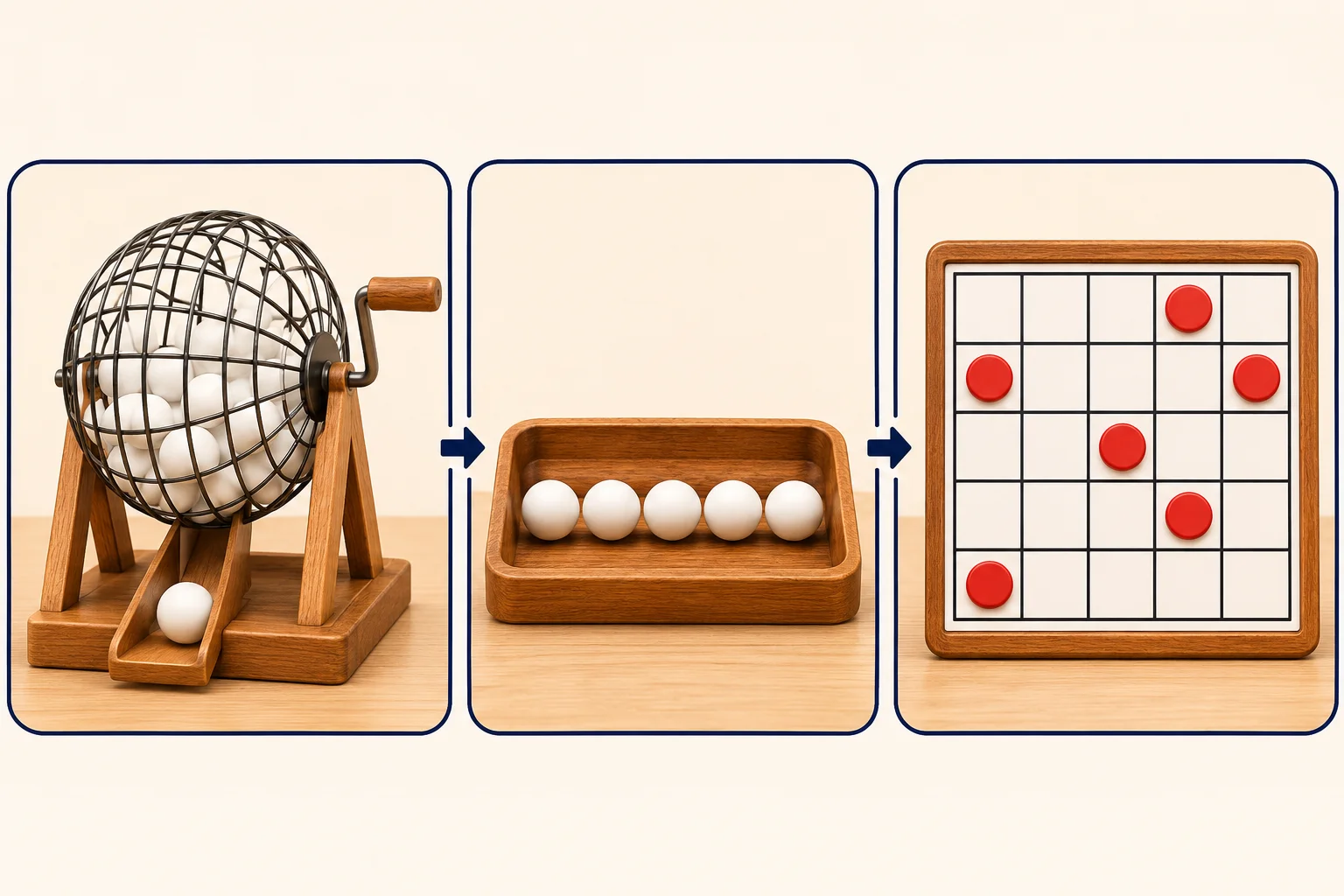
Rehearse a clear call-and-record routine
Before the session, identify who announces numbers and who maintains the record. In a small group, one person may perform both tasks. With more helpers involved, make the handoff explicit so each call is recorded once in the intended place.
Use the actual equipment instructions to establish the sequence. Rehearse drawing, identifying, announcing, and recording a call without rushing. Check whether the caller can see the board clearly and keep unrelated items away from the active record.
If a player requests a repeat, refer to the retained record according to the session’s procedure. Do not guess based on an uncertain memory or move unverified balls into the recorded area merely to make the display look complete.
Keep the record intact while a claim is checked
When someone claims a win, pause the routine as required by the session’s rules. Leave the player’s marks and the caller’s record available for the designated checker. Compare the relevant numbers and the announced pattern before clearing either component.
A master board helps organize that comparison, but it does not decide the rules by itself. Requirements about timing, the last call, or simultaneous claims belong to the rules communicated for the session.
Once the result is resolved, follow the announced instruction about continuing the same draw or starting a new one. Do not assume that a new pattern always means every record should be cleared immediately.
Evaluate the board supplied with a set
WAKUPLAY’s Deluxe Bingo Game Set lists a steel rotary cage, 75 balls, cards, chips, and a master board. Confirm the current board construction, dimensions, marking or retention method, and included quantities for the actual configuration.
Ask for a demonstration or the relevant instructions if the use is unclear. A component list confirms the named item; it does not establish automatic features, public visibility from across a room, or compatibility with equipment bought elsewhere.
For a replacement request, send photographs and the original set reference. State whether the original board is missing, damaged, or simply unsuitable for the intended viewing arrangement. Do not assume individual replacement availability without an answer.
Frequently asked questions
Is a master board the same as a bingo card?
No. The caller’s board manages the call record; a participant’s card shows their individual arrangement and marks. Confirm the intended role when a listing uses the general word board.
Does a master board call numbers automatically?
Do not assume an electronic or announcement function. Ask how the particular component records calls and which tasks remain with the organizer.
Can I clear the board after a player calls Bingo?
Keep the active record available until claims are resolved and the organizer gives the appropriate reset instruction. Follow the session’s announced rules.
When you contact WAKUPLAY about a bingo game set, include the format, caller equipment, intended group, and required checking arrangement. Ask which board is supplied and how it is used before comparing the complete package.