If you’re planning a bingo event or purchasing bingo supplies, one of the first decisions is whether to use 75-ball or 90-ball bingo. Both games are easy to learn and suitable for group activities, but they use different cards, number ranges, and winning rules.
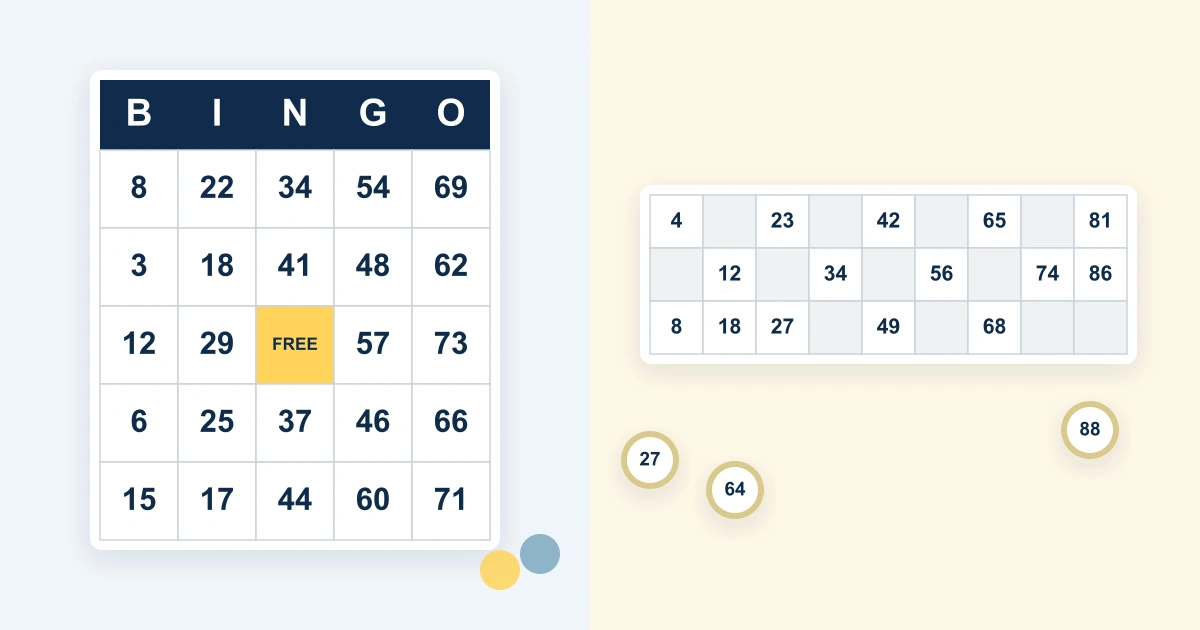
The main difference between 75-ball and 90-ball bingo is the game format: 75-ball bingo uses a 5×5 card with a free center space and supports a variety of winning patterns. Traditional 90-ball bingo uses a 3×9 ticket containing 15 numbers and typically awards wins for one line, two lines, and a full house.
In this guide, we’ll compare the two formats, explain how each game works, and help you choose the right bingo supplies for your next event.
75-Ball vs. 90-Ball Bingo: Quick Comparison
Here’s an overview of the most important differences.
| Feature | 75-Ball Bingo | 90-Ball Bingo |
|---|---|---|
| Number Range | 1–75 | 1–90 |
| Common Markets | United States and Canada | United Kingdom and other markets |
| Card Layout | 5 rows × 5 columns | 3 rows × 9 columns |
| Numbers per Card | 24 numbers plus a free center | 15 numbers |
| Typical Winning Patterns | Lines, corners, X, blackout | One line, two lines, full house |
| Game Structure | Winning pattern announced for each game | Often three winning stages per game |
| Equipment | 75-ball cards and matching number set | 90-ball tickets and matching number set |
Neither format is universally better. The right choice depends on your audience, regional preferences, and how you want to organize the game.
What Is 75-Ball Bingo?
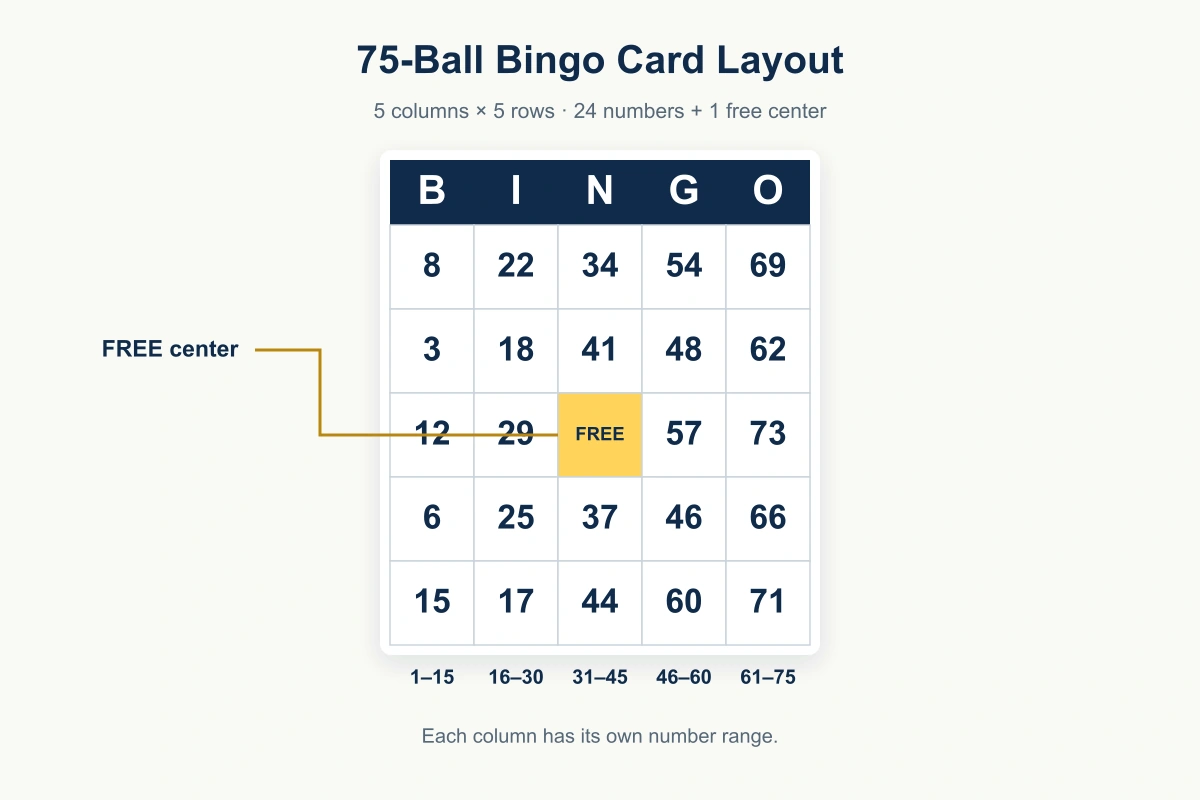
75-ball bingo is a familiar game format in North America. It uses numbers from 1 to 75 and a square bingo card with five columns labeled B, I, N, G, and O.
Each column contains numbers from a specific range:
| Column | Number Range |
|---|---|
| B | 1–15 |
| I | 16–30 |
| N | 31–45 |
| G | 46–60 |
| O | 61–75 |
A standard card has 24 numbered spaces and one free space in the center. The free space counts as already marked when it forms part of a winning pattern.
How Do You Play 75-Ball Bingo?
- Give each player a 75-ball bingo card and markers.
- Announce the winning pattern before the round begins.
- Draw a numbered ball at random and announce its letter and number, such as B-8 or O-71.
- Players mark matching numbers on their cards.
- The first player to complete the announced pattern calls “Bingo!”
- The caller verifies the card against the numbers drawn.
Because the winning pattern can change between rounds, 75-ball bingo offers plenty of flexibility for themed events and group activities.
Common 75-Ball Bingo Winning Patterns
- Straight Line: Complete a horizontal, vertical, or diagonal line.
- Four Corners: Mark the four corner squares.
- X Pattern: Complete both diagonals.
- Blackout: Mark every numbered space on the card.
Event organizers can alternate between simple and more challenging patterns to keep players engaged. However, the required pattern should always be explained before the game begins.
For a complete introduction, see our How to Play Bingo: Rules, Patterns & Tips for Beginners guide.
What Is 90-Ball Bingo?
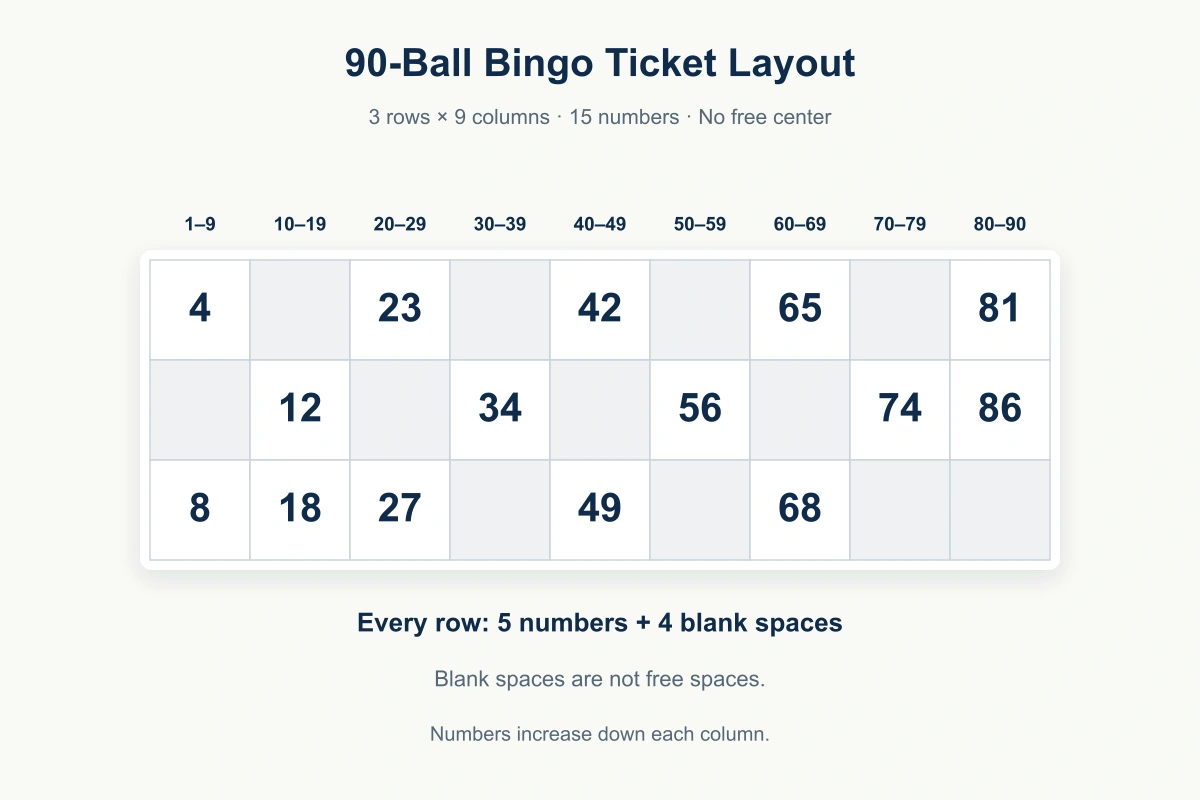
90-ball bingo is particularly popular in the United Kingdom. Instead of the familiar square B-I-N-G-O card, it uses a rectangular ticket with three rows and nine columns.
Each row contains five numbers and four blank spaces, giving each ticket a total of 15 numbers.
The game uses numbers from 1 to 90. In a traditional ticket layout, numbers are arranged by tens groups across the columns, with the first column covering 1–9 and the last covering 80–90.
How Do You Play 90-Ball Bingo?
- Give each player one or more 90-ball bingo tickets.
- Draw numbers randomly from a set numbered 1–90.
- Players mark each matching number on their tickets.
- The first player to complete a horizontal row claims the one-line win.
- Play continues for the two-line win, usually requiring two completed rows on the same ticket.
- The full-house win goes to the first player to mark all 15 numbers on a ticket.
In a traditional three-stage game, players can have separate opportunities to win during the same round. Exact rules, prize structures, and tie handling depend on the organizer.
What Is a 90-Ball Bingo Strip?
A traditional strip contains six 90-ball tickets. In a properly constructed six-ticket strip, every number from 1 to 90 appears exactly once across the six tickets.
This is an important distinction for buyers sourcing 90-ball bingo tickets. A single ticket and a complete six-ticket strip are not the same product.
What Are the Biggest Differences Between 75-Ball and 90-Ball Bingo?
1. Card Design and Layout
The most obvious difference is the shape of the card.
A 75-ball card has a 5×5 grid with B-I-N-G-O across the top. A 90-ball ticket has a 3×9 grid with blank spaces between its numbers.
This affects how players read their cards, how winning patterns work, and which printed or reusable card products organizers need.
2. Winning Conditions
In 75-ball bingo, the organizer typically announces a specific pattern, such as a line, four corners, or blackout. The game ends when a valid winning claim is confirmed, according to the event rules.
Traditional 90-ball bingo commonly has three winning stages: one line, two lines, and full house.
Both formats offer variety, but 75-ball bingo places more emphasis on changing card patterns, while 90-ball bingo often follows a familiar progression of wins.
3. Number Calling
In 75-ball bingo, numbers are commonly announced with their column letter, such as G-54.
In 90-ball bingo, callers generally announce the number itself. Traditional bingo calls and nicknames may also be used, depending on the audience and local customs.
4. Equipment Compatibility
Although both games use numbered draws and player cards, their equipment is not fully interchangeable.
For example, a 75-ball card cannot be used as a standard 90-ball ticket, and a 75-ball numbered ball set does not provide all the numbers required for a 90-ball game.
Before ordering supplies, confirm the game format and make sure the cards, numbered balls, and drawing equipment are compatible.
Which Bingo Format Is Better for Your Event?
The best format depends on who will play and what kind of experience you want to create.
For Schools and Classroom Activities
75-ball bingo may be a convenient choice for North American classrooms because the B-I-N-G-O card is familiar and the rules are easy to explain.
Teachers can also use custom educational bingo cards for learning activities, although these may follow different rules from traditional number bingo.
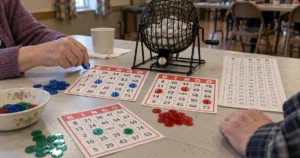
For Senior Living Communities
Both formats can work well for senior living activities. Familiarity matters more than choosing one format over the other.
In addition to the game format, prioritize readable cards, clear number calling, comfortable seating, and easy-to-handle markers.
For Community Bingo Nights
Choose the version that participants already know. In North America, that may be 75-ball bingo; in the UK, 90-ball bingo may be more familiar.
For first-time organizers, a simple schedule and clearly explained rules are more important than adding complicated variations.
Need help preparing your event? Read our How to Host a Bingo Night guide for supplies, planning tips, and a sample event schedule.
For Distributors and Wholesale Buyers
For distributors, event suppliers, and wholesale buyers, the target market should guide the product selection.
Before sourcing bingo equipment, consider:
- Target market: Are customers primarily looking for 75-ball or 90-ball bingo?
- Card format: Do buyers need reusable cards, disposable sheets, individual tickets, or ticket strips?
- Numbered ball sets: Does the equipment match the intended format?
- Expected player count: How many cards and markers are needed per event?
- Repeat usage: Will the supplies be used for occasional parties or recurring organized activities?
- Packaging: Are the products intended for individual sales, event kits, or wholesale distribution?
Answering these questions before placing an order can help avoid mismatched products and unnecessary replacement purchases.
How to Choose the Right Bingo Supplies
Whether you’re hosting a one-time event or sourcing products for resale, start with the format your customers or participants need.
Bingo Cards and Tickets
For 75-ball games, look for cards with the correct B-I-N-G-O number ranges and a free center space.
For 90-ball games, look for tickets with three rows, nine columns, and 15 numbers. If purchasing strips, confirm the ticket arrangement and number coverage.
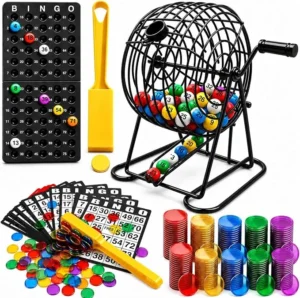
Bingo Cages and Numbered Balls
Choose a drawing system designed to handle the correct number range. Confirm that the numbered balls are complete, readable, and compatible with the equipment.
Bingo Chips and Markers
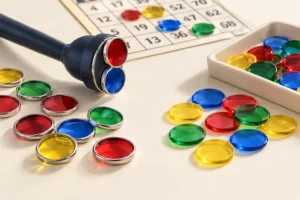
Reusable cards are often paired with removable chips, while disposable paper cards may be marked with daubers or pens.
Consider card size, player accessibility, and how frequently the equipment will be reused.
Complete Bingo Sets
A complete set can simplify purchasing, especially for organizations that need several types of equipment at once.
However, always check what is included. Not every set contains enough cards or markers for a large group, and not every set supports both 75-ball and 90-ball games.
Can You Use 75-Ball Supplies for 90-Ball Bingo?
Not as a standard, complete 90-ball setup.
Some general-purpose accessories, such as tables, storage containers, or suitable removable markers, may work for either game. However, the cards and numbered ball sets must match the chosen format.
A 75-ball set is missing numbers 76–90, while a 75-ball card has a completely different layout from a 90-ball ticket.
For event organizers and wholesale buyers, treating the two formats as separate equipment requirements is the safest approach.
Frequently Asked Questions
Is 75-ball bingo the same as 90-ball bingo?
No. They use different number ranges, card layouts, and typical winning rules. 75-ball bingo uses a 5×5 card, while 90-ball bingo uses a 3×9 ticket.
Which is easier, 75-ball or 90-ball bingo?
Both are beginner-friendly. Players familiar with the B-I-N-G-O grid may find 75-ball bingo easier to recognize, while players accustomed to traditional UK bingo may prefer the 90-ball format.
How many numbers are on a 75-ball bingo card?
A standard 75-ball bingo card has 24 numbers and one free center space.
How many numbers are on a 90-ball bingo ticket?
A standard 90-ball bingo ticket contains 15 numbers arranged across three rows and nine columns.
Does 90-ball bingo have a free space?
No. Standard 90-ball bingo tickets have blank spaces, but these are not free spaces that count toward a winning line.
Can you play 90-ball bingo with a 75-ball cage?
Only if the equipment is specifically compatible with a complete 90-ball set. A standard 75-ball set does not contain all 90 required numbers.
Which bingo format is more popular in the United States?
75-ball bingo is a common format in the United States, while 90-ball bingo is strongly associated with the United Kingdom. Local preferences and specific game variations can differ.
Final Thoughts: Choosing Between 75-Ball and 90-Ball Bingo
The main differences between 75-ball and 90-ball bingo come down to the cards, number ranges, and winning patterns. Both formats can create an enjoyable experience for schools, senior living communities, event organizers, and recreational groups.
If you’re planning an event, choose the version your participants know best. If you’re purchasing bingo supplies for a business, consider your customers’ regional preferences and confirm equipment compatibility before ordering.
At WAKUPLAY, we help businesses and organizations explore game supplies for group activities, events, and wholesale purchasing.
Explore WAKUPLAY Game Collections →
Looking for bingo supplies for your organization or wholesale business? Contact WAKUPLAY to discuss your requirements →