A practical bingo supplies buying checklist starts with the game format, expected attendance, cards per player, and whether materials will be reused. Confirm those decisions before comparing bundles. A set that looks complete in a photograph may still need extra cards, markers, or replacement parts for your event.
This guide helps organizational buyers turn an event brief into a clear request for quotation. It focuses on what to specify and verify, rather than assuming that one package suits every room or purchasing schedule.
Define the game before ordering equipment
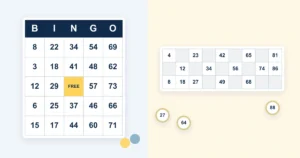
Record whether you are planning a 75-ball or 90-ball session. Cards, balls, and number-checking arrangements need to match the chosen format. Do not combine components simply because their product names include the word bingo.
Our 75-ball versus 90-ball bingo comparison explains the format differences. Once a format is chosen, give every prospective supplier the same specification. This makes quotations easier to compare and reduces the risk of receiving incompatible components.
Build quantities from your attendance plan
Separate the number of people attending from the number of cards in use. A player managing two cards needs a different allocation from a player using one. Also decide whether cards will be cleared and reused between rounds or replaced with fresh sheets.
For reusable cards, a starting calculation is expected players multiplied by cards per player, plus an explicitly chosen reserve. For disposable sheets replaced each round, include the number of rounds in the calculation. Keep sheets, individual cards, packs, and cases distinct when requesting prices.
A worked planning example
Suppose an organizer expects 50 players, each using two reusable cards. The base requirement is 100 cards. If the organizer chooses 10 additional cards as a reserve, the order requirement becomes 110. That reserve is an example planning choice, not an industry rule or a guarantee against shortages.
If those same players receive new disposable cards for six rounds, the base requirement becomes 600 individual cards before reserves. A supplier selling multiple cards on each sheet needs the requirement translated into sheets as well. Ask the supplier to confirm that conversion in writing.
Use a component-by-component purchasing checklist
| Component | What to specify | What to verify |
|---|---|---|
| Cards or sheets | Format, dimensions, cards per sheet, quantity, reusable or disposable | Legibility, printing layout, pack units, and numbering arrangements |
| Cage and balls | Matching game format, ball count, ball dimensions, cage footprint | Complete numbered set, readable markings, operation, and storage |
| Chips or daubers | Marking method, quantity per player, colors, and material compatibility | Fit on the card and suitability for reuse or permanent marking |
| Number checking | How called numbers and winning cards will be checked | Compatibility with the selected balls and event procedure |
| Storage and replacements | Containers, replacement components, and labeling needs | What is included versus separately quoted |
This is a specification checklist, not a statement that every listed item is included in every product. Review the individual listing and ask about anything that is unclear.
Choose markers around the cards and users
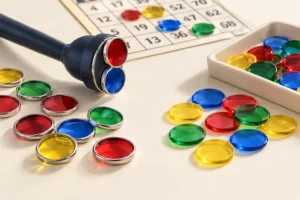
Reusable chips can be removed when a round ends. Daubers leave a mark, so the card material and intended reuse matter. Request the relevant dimensions rather than assuming that any marker will fit any printed square.
For magnetic chips, confirm whether a collection wand is included or quoted separately. The presence of metal-reinforced chips does not establish what other accessories are in a package. WAKUPLAY’s 400-piece magnetic bingo chip listing provides a specific product to review when building a marker requirement.
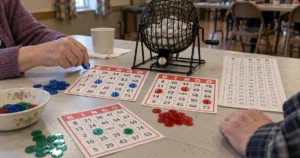
For a senior center or mixed-ability group, let the actual users try a sample card and marker together. Consider number readability, contrast, ease of handling, table space, and the number of cards each person will manage. Do not treat a large product photograph as proof of accessible sizing.
Compare complete sets with separate purchases
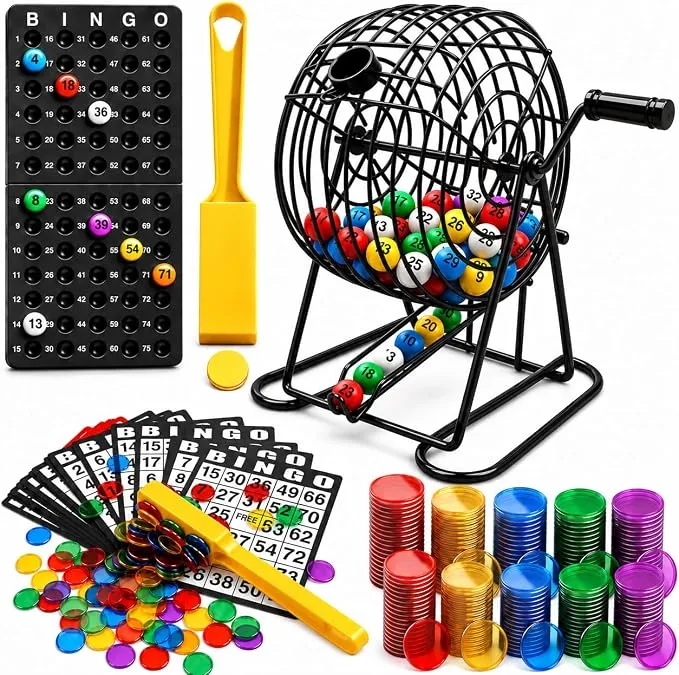
A bundle can simplify purchasing, but compare its contents with your quantity plan. One cage may serve a session while the number of player cards and chips scales with attendance. Buying several identical bundles can leave you with extra cages but still the wrong marker allocation.
Check the component list for the Deluxe Bingo Game Set before treating it as a complete event order. Ask for separate quantities wherever the published contents do not cover your plan. Product availability, quantities, and final configuration should be confirmed in the quotation.
Send suppliers a quotation-ready brief
A clear brief should identify the game format, component quantities, delivery destination, required arrival date, and whether samples are needed. Include the destination postal code and distinguish your event date from the earlier date by which you need time to receive and inspect the goods.
- List exact units: individual chips, card sheets, packs, or complete sets.
- Attach required dimensions and explain which specifications are essential.
- Ask whether freight, taxes, packaging, and replacement parts are included.
- Request written confirmation of minimum order quantities and lead times.
- For customization, ask what is available before promising it to your own customer.
These are questions to ask, not published promises about WAKUPLAY’s pricing, production capacity, certification, or turnaround. Keep your comparison sheet consistent so that a lower quoted unit price is not mistaken for a lower total delivered cost.
Inspect the order before putting it into service
Count received components against the agreed packing list. Check that the ball set matches the selected format, look for missing or duplicated numbers, and test the cage using its operating instructions. Inspect printed cards and try the selected marking method on a sample.
Keep photographs and packaging details if something appears damaged or incomplete, then contact the supplier with the order reference. For repeat events, maintain a simple inventory record after each session. Record missing components before the next order rather than rediscovering the shortage during setup.
Frequently asked purchasing questions
How many cards should I order?
Start with players multiplied by cards per player. Include rounds only when fresh cards are distributed for each round, then add a reserve appropriate to your attendance uncertainty. Confirm whether the quotation counts individual cards or sheets.
Is a complete bingo set enough for a large group?
Not necessarily. Compare its card and marker quantities against the planned attendance. A bundle title alone does not establish how many participants it can serve.
Should every buyer request samples?
A sample is especially useful when size, readability, marking compatibility, or customization is important. Ask about sample availability, cost, and timing rather than assuming a free sample service exists.
Turn your checklist into a specific inquiry
Bring your format, attendance calculation, component list, and delivery requirements together before ordering. If you want to discuss a WAKUPLAY supply requirement, request a quotation with your purchasing brief. A precise specification gives both sides a clearer basis for confirming the right products and quantities.